Since the statute of limitations is up on this, I'll confess one reason: to bilk the bilker that tried to rip me off on two cats. I had two nice bobcats at a fur auction several years ago, both dorsal skinned for taxidermy. Only one of the dozen or so buyers in attendance was buying for taxidermy, and he knew he didn't have any immediate competition, so he offers me ten bucks a piece. No sale!
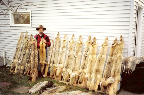
Next fur auction is about four weeks away. I go home, open the back end of each cat, slide a one by four in and with the skin side out, do a beautiful baseball stitch to close both full length holes up. I then stretch and dry both hides, fur side out, and take them to the auction.
As luck would have it, I'm lot number 21, right before a longliner buddy of mine that has two truckloads of fur. I soon see the chance to score a big 'un on this buyer. I tell my buddy that just before my furs hit the table, I'll help him move his fur in. My first small bundle of coons is tossed on the table for the buyers to examine, and we begin hauling in bundle after bundle of put up coons, coyotes, and cats. Like, 300 coyotes, 500 coons, a couple hundred cats. All the buyers are so primed to get at this wealth of fur, they don't bother to look my cats over too well. the auctioneer's a friend of mine and he rallies them with stuff like, "C'mon guys, let's pay out good on these two fine cats to get warmed up for the next big lot of fur. Whaddya gimme...?" and so on.
When the dust cleared, during a time when primo cats were bringing 35 bucks a piece, I got 50 for one, and 65 for the other. Do I feel bad? Heck no. They don't use the back anyway, where the stitches were. He didn't lose a dime on either of them, but he sure didn't make as much off me wither. As a taxidermist, I don't sew any holes in a cape or hide before they go to the tannery because they'll just get torn out while shaving the hide. Let 'em be and do my needle work during the hide prep.