

wilydawg
New member
Thanks again to Orkan at Primal Rights for selecting me as one of the testers for his new product.
Here's my review:
I received the tool in good condition, and it was well packaged for a safe arrival. Included in the box were:
- Main die body
- Small and large primer shuttles
- Shell holder retainer
- Small and large primer tubes
- Small and large priming rods
- Instruction booklet
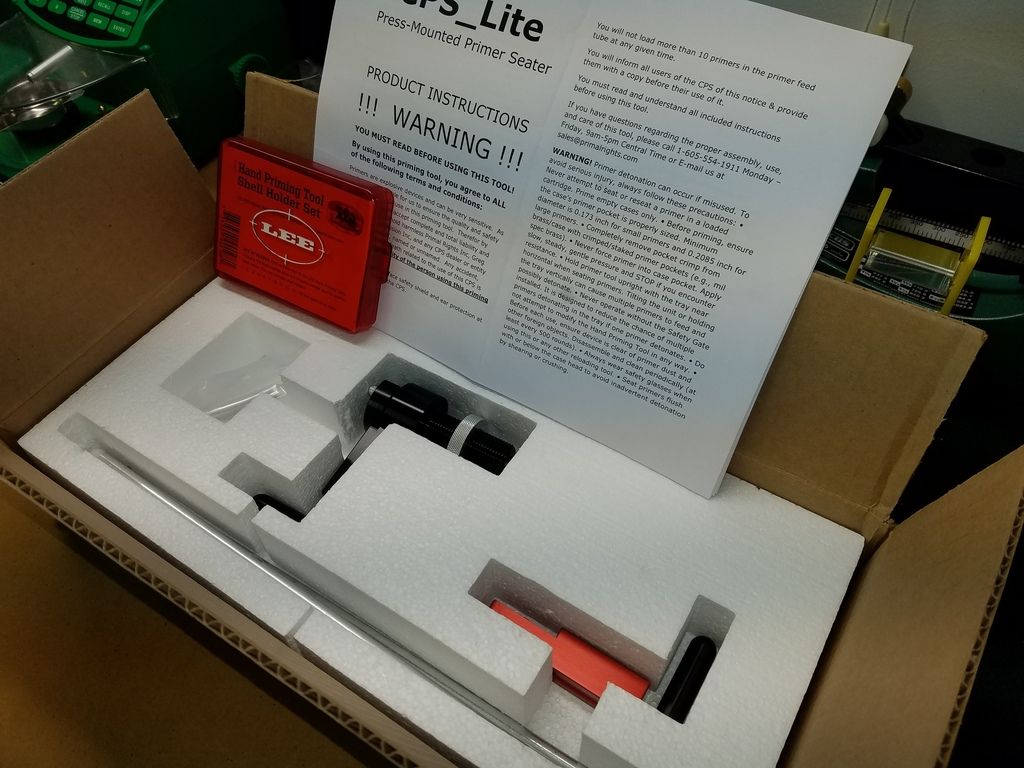
The package
Not included were the primer flip tray (which I already had), and shell holders, which I did not. I purchased a Lee Priming Tool Shell Holder Set on Amazon for $15.99 shipped.
The CPS-Lite parts are well machined with an excellent finish which led to an overall feeling of high quality.
Setting the tool up was very simple. I watched the instructional video prior to beginning and it only took a few minutes to get the main die body set at a 45 degree angle to the press handle, prime one case to proper depth by feel and and then set for depth. I selected new Remington .243 Winchester cases and Federal 210 Large Rifle primers for the test.
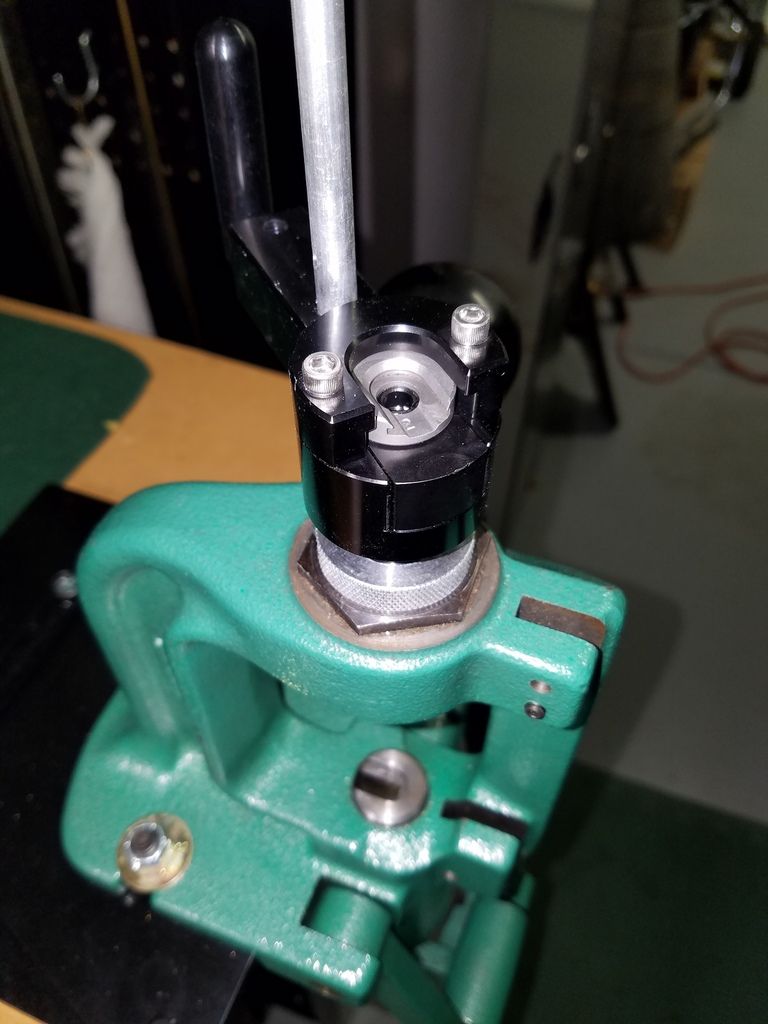
Set up in RCBS Rock Chucker press
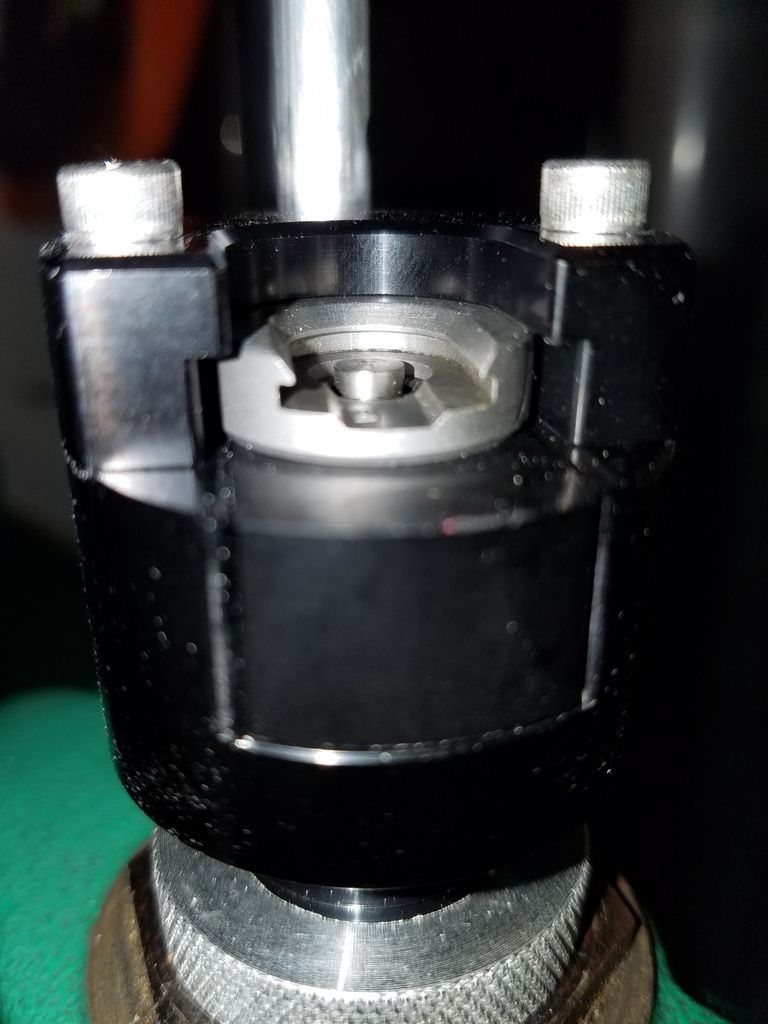
Priming rod in full up position after being adjusted to .005 seating depth
Before beginning, I measured primer seating depth on rounds of the same caliber, brass and primers which I had loaded using an RCBS Automatic Bench Priming Tool. I have used this tool for many years and believe that I've developed a pretty good "feel" for getting consistent results. After measuring a number of these rounds it was common to find some variance of up to 1.5 thousandths between them. Some of this of course could have possibly been due to inconsistencies in the cases and/or the primer cups.
I then began priming using the CPS-Lite. I found that the tool operated smoothly, with the primer shuttle not exhibiting a single primer "hang up". It took me 15-20 minutes to prime 50 rounds, but only because I measured each one for consistency. Future jobs will of course go much more quickly. I found that with the exception of a few cases which were out of spec by 1.5 to 2 thousandths (which again I assumed could have been inconsistencies in the brass and/or primer cups) the majority of the cases were either right on spec or very close to it, so there was definitely an improvement in consistent seating depth, which is one of the main benefits of the tool.
My overall impression with this tool is very positive - simply said it does what it is advertised to do and does it well. For those looking to improve the precision of their priming operation, I wouldn't hesitate to recommend this tool.
wily
Here's my review:
I received the tool in good condition, and it was well packaged for a safe arrival. Included in the box were:
- Main die body
- Small and large primer shuttles
- Shell holder retainer
- Small and large primer tubes
- Small and large priming rods
- Instruction booklet

The package
Not included were the primer flip tray (which I already had), and shell holders, which I did not. I purchased a Lee Priming Tool Shell Holder Set on Amazon for $15.99 shipped.
The CPS-Lite parts are well machined with an excellent finish which led to an overall feeling of high quality.
Setting the tool up was very simple. I watched the instructional video prior to beginning and it only took a few minutes to get the main die body set at a 45 degree angle to the press handle, prime one case to proper depth by feel and and then set for depth. I selected new Remington .243 Winchester cases and Federal 210 Large Rifle primers for the test.

Set up in RCBS Rock Chucker press

Priming rod in full up position after being adjusted to .005 seating depth
Before beginning, I measured primer seating depth on rounds of the same caliber, brass and primers which I had loaded using an RCBS Automatic Bench Priming Tool. I have used this tool for many years and believe that I've developed a pretty good "feel" for getting consistent results. After measuring a number of these rounds it was common to find some variance of up to 1.5 thousandths between them. Some of this of course could have possibly been due to inconsistencies in the cases and/or the primer cups.
I then began priming using the CPS-Lite. I found that the tool operated smoothly, with the primer shuttle not exhibiting a single primer "hang up". It took me 15-20 minutes to prime 50 rounds, but only because I measured each one for consistency. Future jobs will of course go much more quickly. I found that with the exception of a few cases which were out of spec by 1.5 to 2 thousandths (which again I assumed could have been inconsistencies in the brass and/or primer cups) the majority of the cases were either right on spec or very close to it, so there was definitely an improvement in consistent seating depth, which is one of the main benefits of the tool.
My overall impression with this tool is very positive - simply said it does what it is advertised to do and does it well. For those looking to improve the precision of their priming operation, I wouldn't hesitate to recommend this tool.
wily